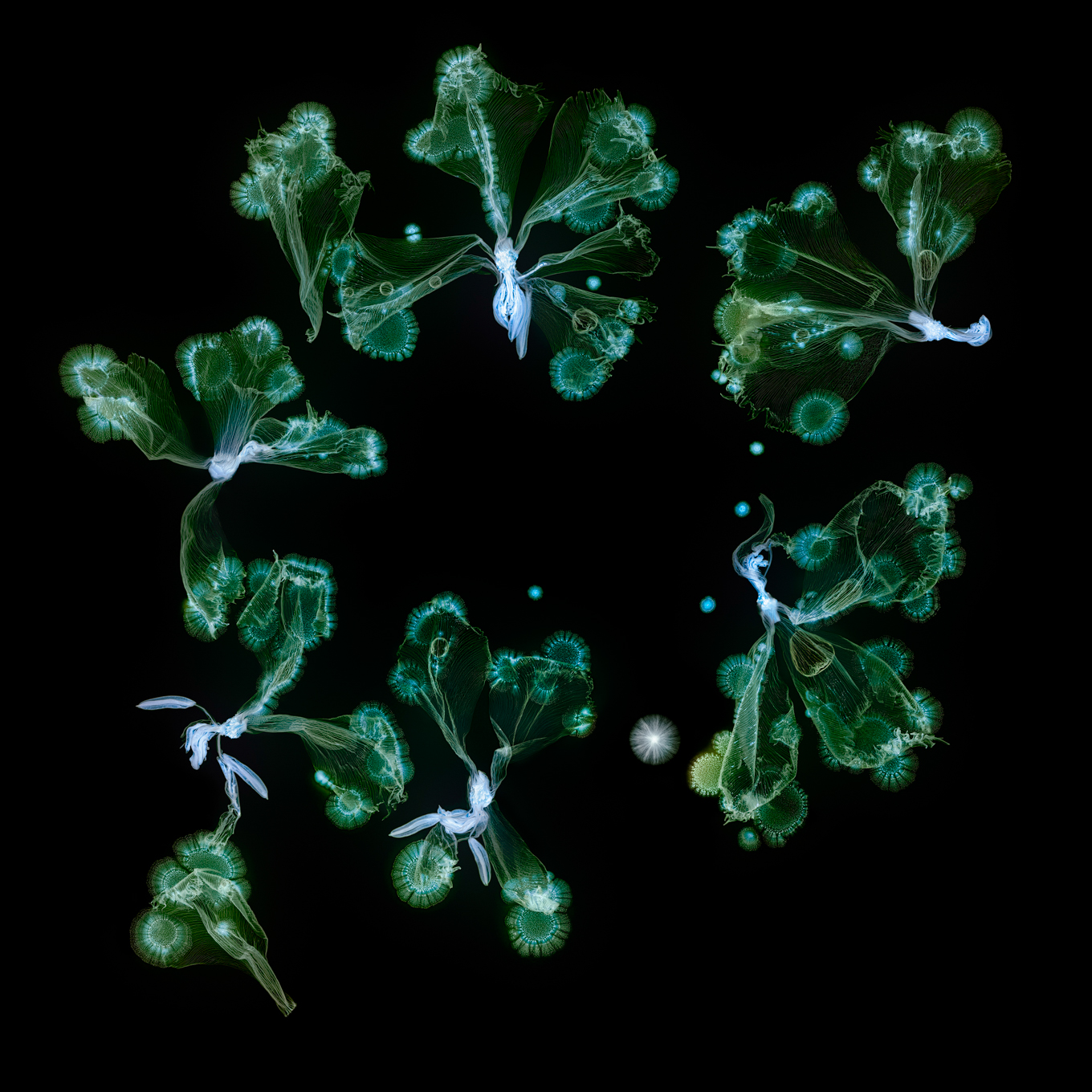
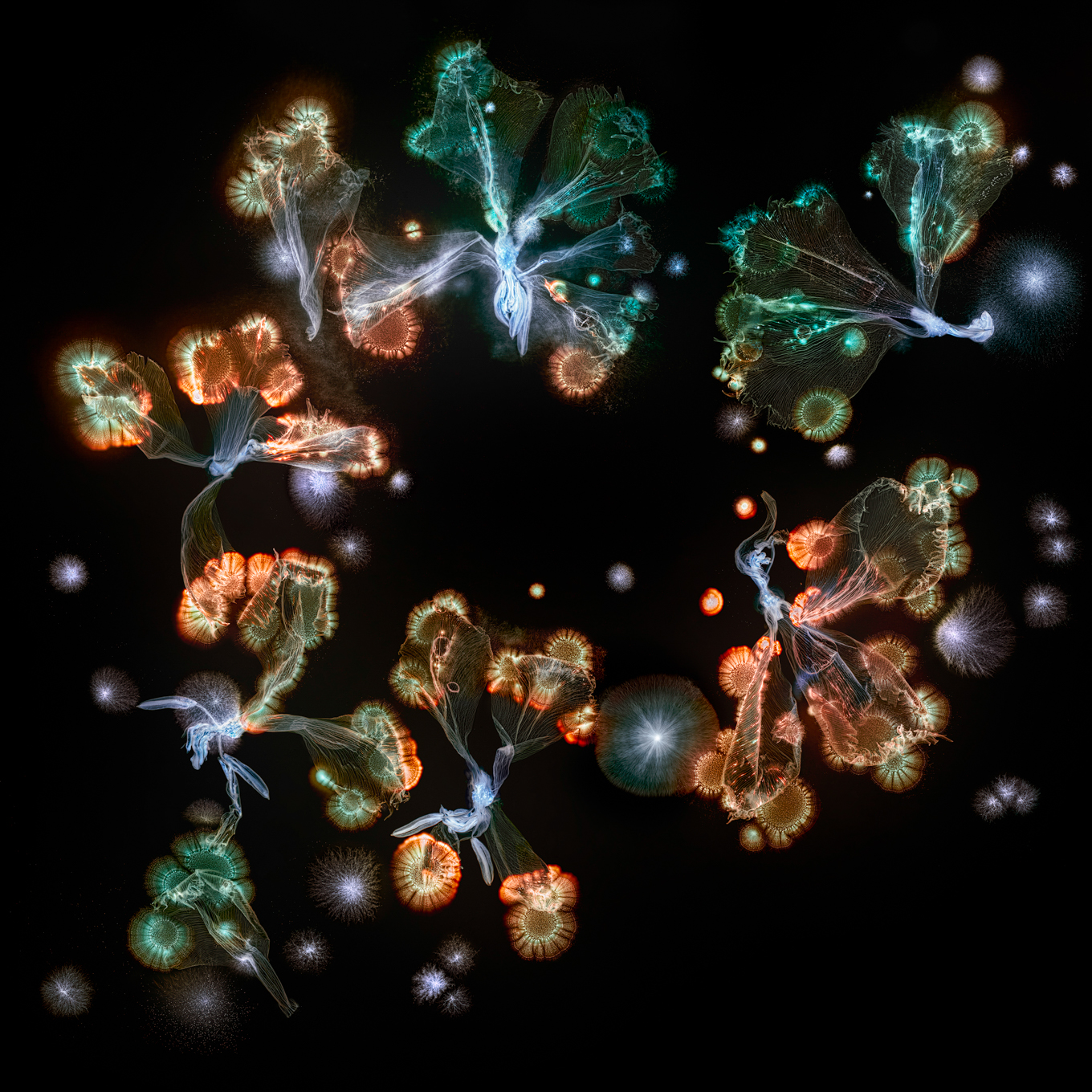
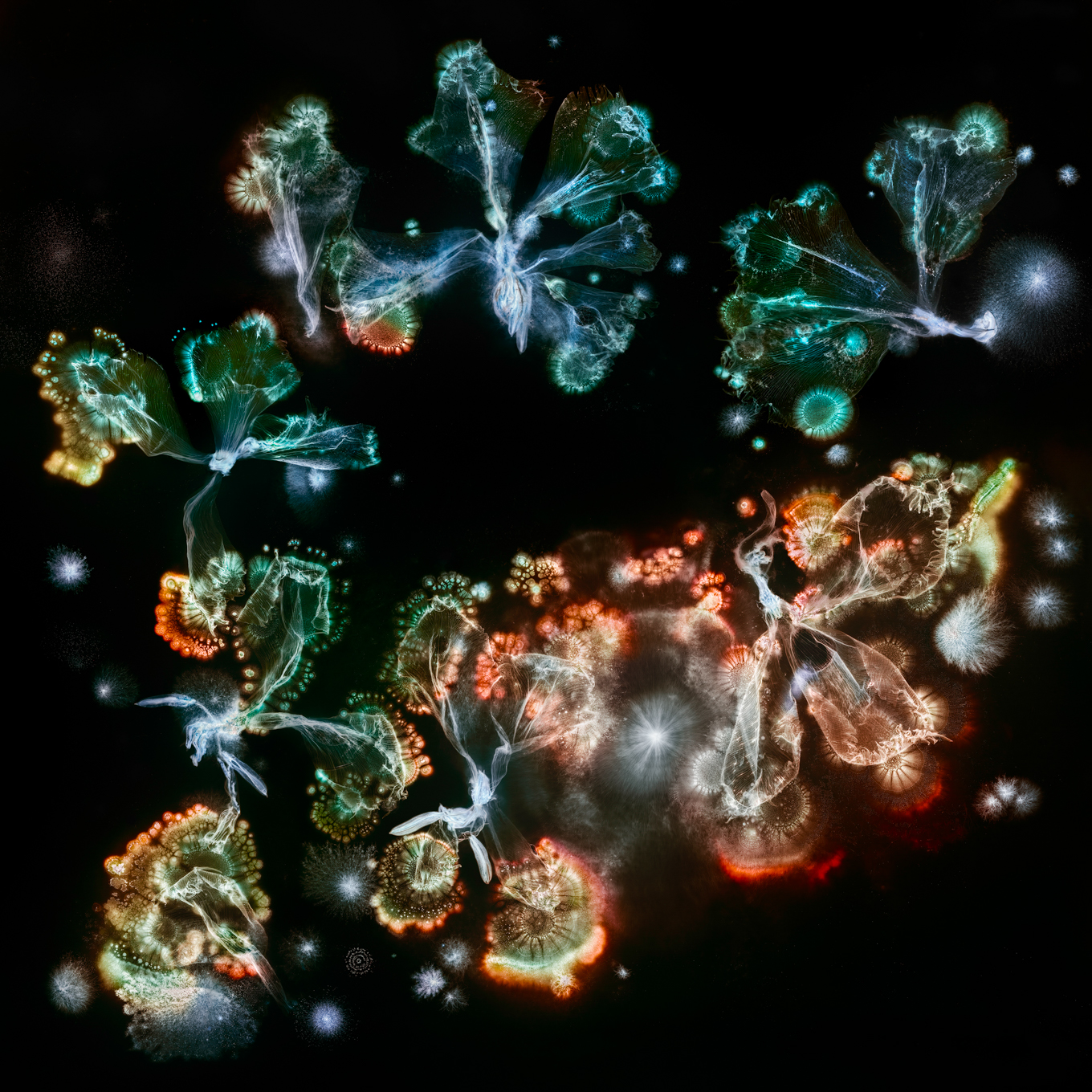
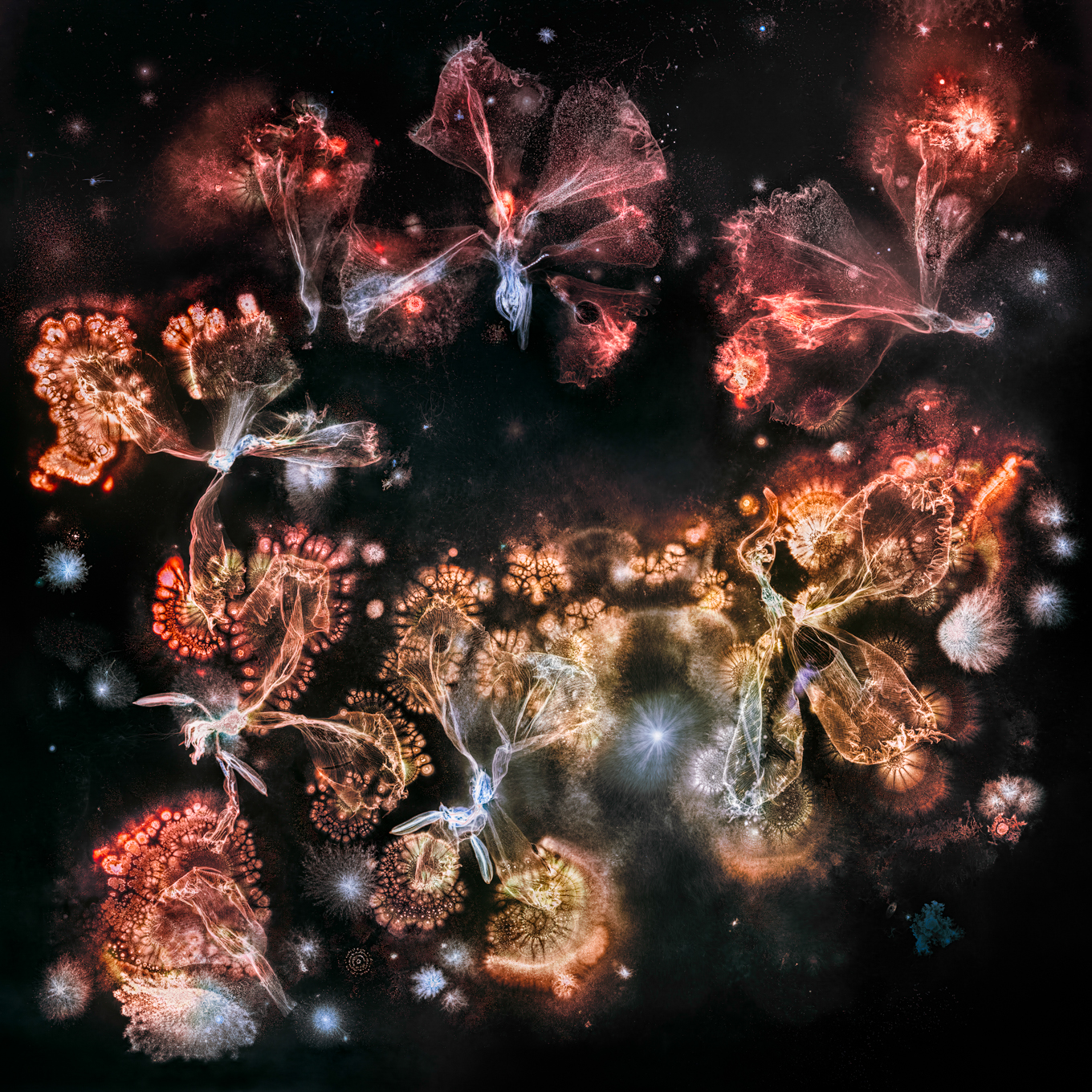
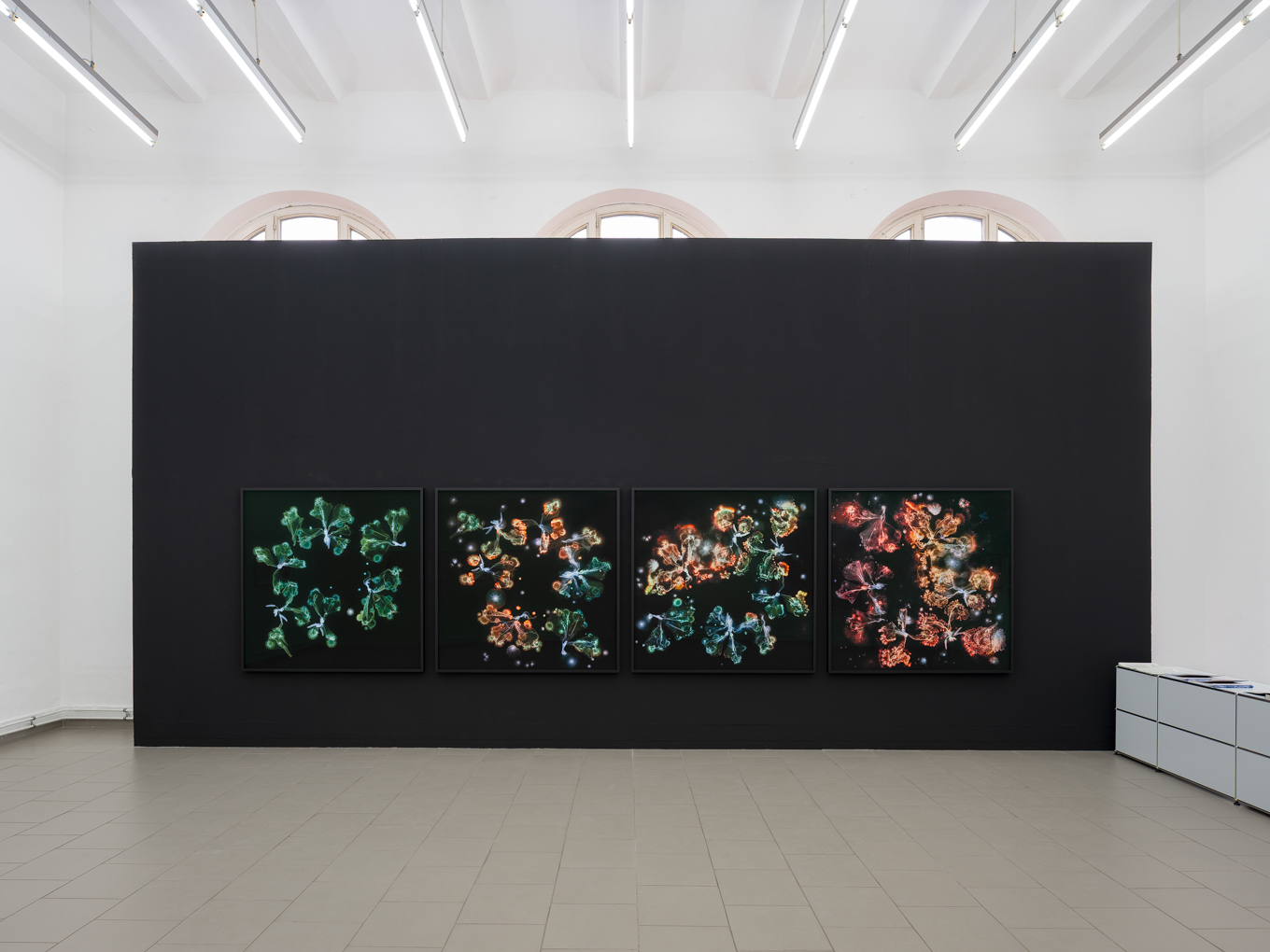
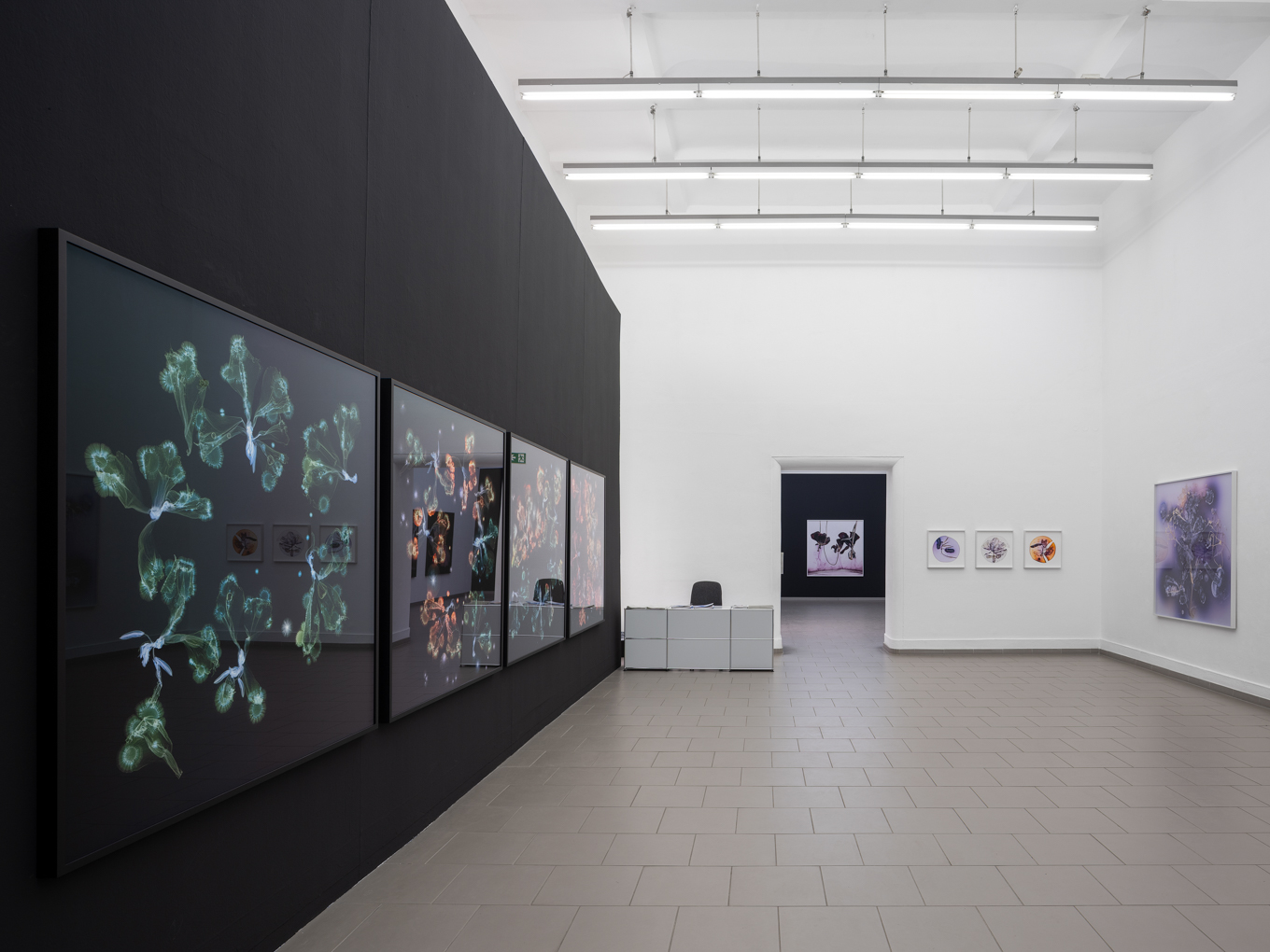
In earlier projects by Kathrin Linkersdorff (Wabi-Sabi, Floriszenzen and Fairies), very elaborately dried and chemically decoloured plants embodied the Japanese aesthetic principle of Wabi-Sabi, which sees beauty in imperfection, transience and decay. For her, the extracted pigments are an expression of life in a special way. By combining decay and new growth, the Microverse project now visualises the full cycle of material flows in nature. In the microbiological laboratory, soil bacteria called Streptomyces coelicolor are grown to produce colourful antibiotic pigments on decoloured flowers of outstanding microstructural beauty. These microbial performances reveal what normally remains hidden in the dark soil – provided it is a healthy, living soil with decaying organic matter and an interactive community of microbes, fungi and small animals. On the stages of the petri dishes, these organic cycles of growth and decay create growing images of translucent, dead plants that blossom again under the spell of microbial pigments, merging science and art in a living theatrum naturae et artis.
Prof. Dr. Regine Hengge, Excellence Cluster “Matters of Activity” at Humboldt-Universität zu Berlin
Artist-in-Residence at the Institute of Biology / Microbiology and associated member of the Cluster of Excellence Matters of Activity. Image Space Material, Humboldt-Universität zu Berlin in collaboration with Prof. Dr. Regine Hengge, Professor of Microbiology, Institute of Biology / Microbiology and project leader in the Cluster of Excellence Matters of Activity. Image Space Material, Humboldt-Universität zu Berlin
from the Microverse III series, 2025, archival pigment print
photo credit installation view: Haus am Kleistpark Berlin, © Andreas Meichsner